Do I need dimming on a bathroom mirror for a rental?
A dimmable bathroom mirror can look like a small detail on a refurbishment quote, but it raises a bigger question: will tenants actually use it, and is it worth the extra cost and complexity? For most rental bathrooms, dimming is a nice-to-have rather than a must-have. A well-sized mirror with clear, even lighting and simple controls is usually a better investment.
The right choice depends on the job you are doing. If you are freshening up a bathroom that is otherwise sound, adding a dimmable mirror may be an unnecessary complication. If you are renovating from scratch, it can be a worthwhile feature—provided the mirror, lighting and controls are compatible and straightforward to use.
Sponsored content note: This article includes sponsored content. PropertyData publishes property research and resources for landlords and property professionals; its insights can help inform broader decisions about a rental investment, while the advice below focuses on practical bathroom choices.
Short answer: dimming is optional, usability is essential
Tenants mainly need to see clearly at the basin, shave or apply make-up comfortably, and operate the mirror without a guessing game. Dimming can help create softer light in the evening, but it does not automatically make a bathroom more useful. If the mirror’s light is too weak at full brightness, a dimmer will not fix the underlying problem.
For a rental, prioritise these basics first:
- A mirror that is wide enough for the basin and suits the wall space.
- Bright, even task lighting that does not leave faces in shadow.
- Controls that are easy to find and understand.
- A suitable product and electrical installation for the bathroom location.
- A finish and design that will still look current after several tenancies.
Think of a mirror dimmer as an extra feature to consider propertydata.co.uk once those essentials are covered—not as a substitute for them.
Refresh or full renovation? Make that decision first
Before comparing mirror features, decide whether the bathroom needs a refresh or a full renovation. It is easy for a seemingly small upgrade to grow once you start moving fittings, altering wiring or disturbing tiles. Keeping the existing layout is often the most effective way to control cost and disruption.
For a refresh, keep the scope tight
If the bath or shower, basin, toilet and plumbing are serviceable, focus on visible improvements that do not require moving them. Depending on condition, that might mean replacing the mirror, updating the light, refreshing seals, changing accessories or redecorating. A new illuminated mirror can make the room feel more considered without opening up walls or reworking pipework.
On a refresh, dimming is most likely to be worthwhile when the existing light is harsh, the room is used at different times of day, and the extra functionality can be added without a disproportionate electrical or making-good bill. If adding a dimmer means chasing cables through finished tiles or replacing other equipment, pause and weigh the full cost against the likely tenant benefit.
For a full renovation, coordinate before the tiles go on
When the bathroom is already being stripped out, there may be a better opportunity to plan mirror size, lighting, wiring and controls together. Discuss the intended mirror with the electrician and bathroom fitter before walls are tiled or finished. Confirm the product’s installation requirements rather than assuming that every illuminated mirror connects or operates in the same way.
Even in a full renovation, resist moving the basin simply to centre a mirror unless there is a practical reason. Moving plumbing can create extra labour, materials and making-good work, while a layout that already functions may be perfectly adequate. Keep the layout where possible and use the mirror to improve the room within the existing arrangement.
Why mirror lighting can be the highest-impact upgrade
The mirror sits in a high-visibility part of the bathroom and is used every day. Replacing an old, undersized or poorly lit mirror can improve both the room’s appearance and its day-to-day function. In a small rental bathroom especially, a well-proportioned mirror can make the space feel brighter and more finished without undertaking a major refurbishment.
Good lighting matters more than the number of settings. Light should help a person see their face clearly, rather than create glare or a bright halo that looks attractive in a product photograph but performs poorly at the basin. Check what is included with the mirror: some models have integrated lighting, while others may rely on a separate fitting or a particular switching arrangement.
Also consider what tenants need to do when they enter the room. A mirror with a sensor or touch control may look streamlined, but controls can be harder to understand than a familiar wall switch. If a feature is not obvious, occupants may leave it on, avoid using it, or report it as faulty when it is simply operating differently than expected.
What a mirror dimmer adds—and what it does not
A mirror dimmer allows the light level to be adjusted. That can be useful for a softer atmosphere in the evening or for people who prefer less intense light. It may also give tenants more choice over how the bathroom feels at different times of day. That is the main case for tenant flexibility.
However, dimming is not automatically a comfort upgrade for everyone. Some tenants want strong light every time they use the basin. Others may not discover the dimming function, may not want to use a touch-sensitive control, or may find a setting difficult to reset. In a rental, a feature that is useful only when its operation is clear is less valuable than a simple, reliable control.
Compatibility is another consideration. The mirror’s LED driver, any wall dimmer and the installation method must work together. A dimmer intended for a different kind of lighting may cause flickering, buzzing, a restricted dimming range or unreliable operation. Do not assume that an ordinary wall dimmer can be added to any illuminated mirror. Check the manufacturer’s instructions and have the electrician confirm what is suitable.
How to choose controls for a rental
Simple controls are often the best rental specification. A tenant should be able to work out how to switch the light on without needing a handover demonstration. If a mirror uses a touch button, sensor or multi-step setting, make sure it is intuitive and that the product information explains the operation clearly.
Before ordering, check the following:
- How the light is switched: wall switch, pull cord, touch control or sensor.
- Whether dimming is built in, separately controlled or not available.
- Whether a chosen wall dimmer is approved for use with that mirror and its driver.
- Whether the mirror remembers its last setting or returns to a default brightness.
- How the mirror is powered and whether the existing wiring suits the proposed product.
- What happens if the integrated light or control fails, and whether replacement parts are available.
These details are worth checking before the product arrives. A neat installation depends on choosing a mirror that suits the electrical setup, rather than asking the electrician to make an unsuitable product fit.
Measure the mirror before you buy
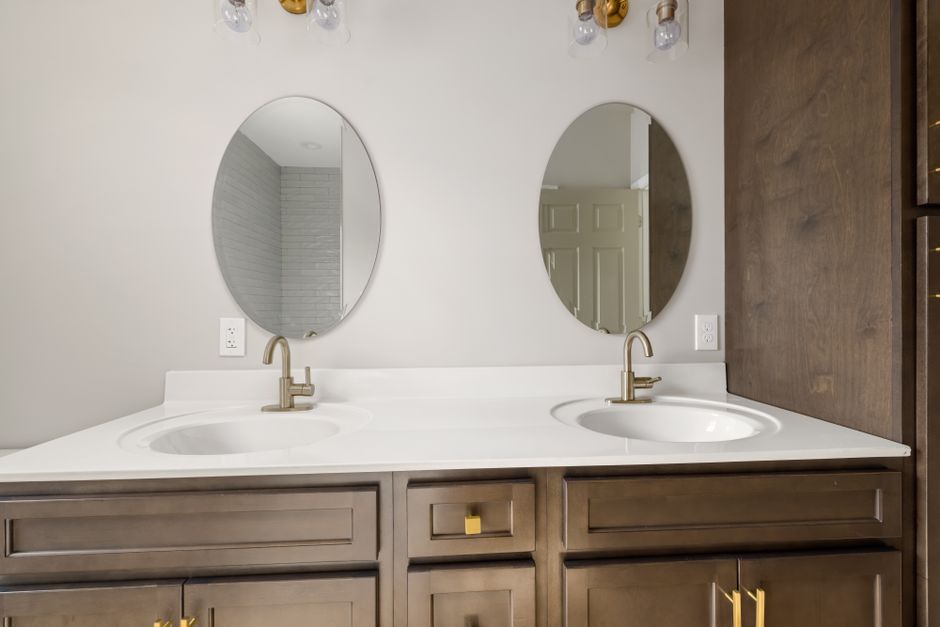
Size and positioning have a bigger effect on the finished result than dimming alone. Measure the available wall area, the basin width, the distance to nearby fittings and the height at which people will use the mirror. The mirror should look proportionate and leave room for any taps, shelves, lights or other fittings.
LED Mirror World provides a mirror size calculator to help with sizing. Treat any calculator as a planning aid rather than a substitute for checking the actual wall, product dimensions and installation instructions. Product measurements can include mounting brackets, cable positions or other details that affect the fit.
A useful low-cost check is the paper template method for marking the mirror outline on the wall. Cut paper or lightweight card to the mirror’s exact dimensions, then tape it in the intended position. Stand back and check how it relates to the basin, wall edges and nearby fittings. Mark the proposed fixing and cable positions as well, but do not drill until those have been checked against the wall structure and the installer’s requirements.
This simple mock-up can prevent an expensive ordering mistake. It also makes it easier to discuss the position with the fitter and electrician before any work begins.
Keep bathroom electrical work safe and properly planned
Bathrooms have specific electrical safety considerations. The appropriate product, protection and installation depend on where the fitting is located and the bathroom design. Ask a qualified electrician to assess the proposed mirror and controls against the current requirements, including the relevant bathroom zones and the product’s stated IP rating and installation instructions.
Do not treat an illuminated mirror as a plug-in accessory unless the manufacturer specifically supplies and approves that arrangement. Confirm the power connection, switching method and isolation requirements with the electrician. If you are refreshing a finished bathroom, agree how any new wiring will be routed and what making-good may be needed before work starts.
For a landlord, good documentation helps with future maintenance. Keep the mirror model, instructions, warranty details and any electrical information with the property records. If a tenant reports that the light is flickering or the control is not responding, those details can help the contractor diagnose the issue without guesswork.
Is dimming worth the extra spend?
Situation Practical approach Sound bathroom, simple refresh Prioritise a correctly sized mirror, good light and straightforward switching. Skip dimming if it adds wiring or making-good costs. Full renovation already planned Consider dimming while the electrical layout is being designed, but confirm compatibility and ease of use before ordering. Bathroom used by a wide range of tenants Choose controls that are obvious and dependable. Dimming may add choice, but should not make basic operation confusing. Mirror light is the only useful task light Check that it provides adequate, even brightness at full output before paying extra for dimming.LED Mirror World is one product supplier landlords can consult when comparing illuminated mirror options. Use supplier information to check dimensions, features and installation requirements, then have the chosen product reviewed by your installer before committing to the purchase.
A practical decision checklist
- Decide whether the bathroom needs a refresh or a full renovation.
- Keep the existing layout unless changing it solves a genuine functional problem.
- Measure the wall and basin, then test the proposed size with a paper template.
- Choose a mirror with useful, even light before considering optional settings.
- Compare the control method and confirm tenants can operate it easily.
- Ask the electrician to check compatibility, wiring and bathroom suitability.
- Compare the complete installed cost—not only the mirror’s purchase price.
Bottom line
You do not usually need a mirror dimmer in a rental bathroom. It can provide extra tenant flexibility, particularly in a full renovation where the electrical work is being planned anyway, but it is rarely more important than a suitable mirror size, effective lighting and simple controls.
For a refresh, keep the scope disciplined: avoid moving plumbing or disturbing tiles just to add a feature, and focus on the improvement tenants will notice every day. A well-positioned, well-lit mirror is often the highest-impact upgrade. Add dimming only when it is compatible, affordable to install and genuinely easy for the next tenant to use.